

Reducing your food waste can seem daunting, but it doesn’t have to be. Depending on your business and industry, there are many ways to repurpose waste or design it out of your operations to save money and support sustainable growth.
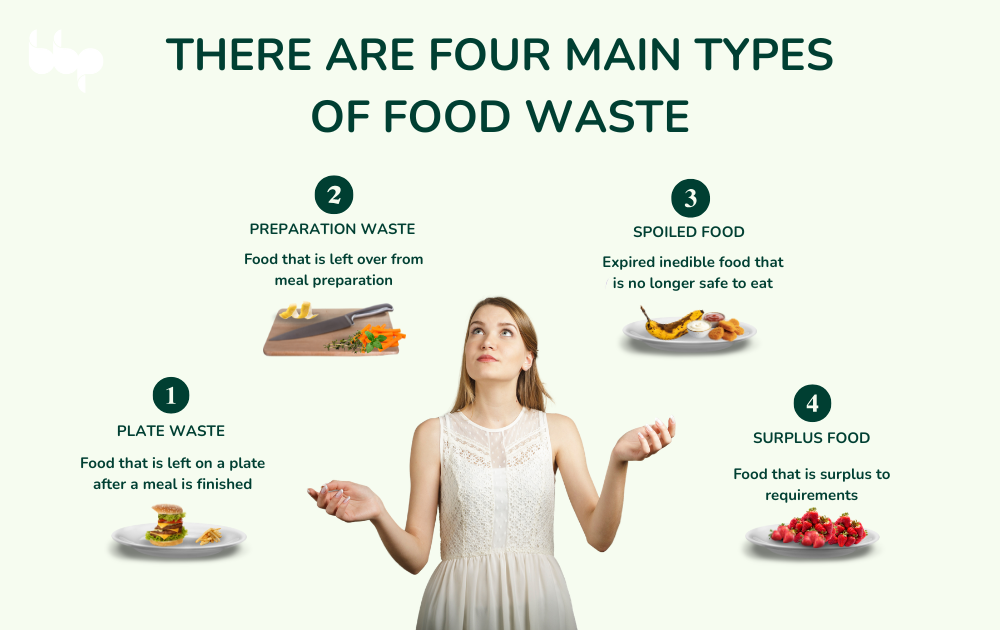
A great place to start is by sorting your food waste into four main categories: plate waste, preparation waste, spoiled or expired food, and surplus food. Each category can then be addressed with targeted actions. You may be surprised by what, and how much food waste appears in each area.
Which type of food waste makes up the majority in your business?
Sector Specific Tips:
Food Services
- Repurpose your off cuts and trimmings in a new menu item; try pickling, preserving, fermenting, dehydrating.
- Only buy as many ingredients as you need before they spoil, clean your cool rooms regularly.
- Inspire your staff to try making interesting staff meals with excess prep waste or ingredients
- Reduce portion sizes if customers aren’t finishing their meals.
- Organise a coffee ground pick-up.
Office-based
- Have a communal food section in your fridge or utilise ‘use it up’ tape to communicate excess food that can be eaten .
- Have labels to identify ownership and dates of food items.
- Update catering numbers regularly to not over-cater internal events. Offer excess food for staff to take home.
- Install a countertop food waste dehydrator to turn food waste into fertilizer overnight.
- Give away coffee grounds for your employees to use in their gardens.
Aged Care and Childcare
- Fill drink cups to three quarters only and welcome refills.
- Get regular feedback from residents on menu preferences and portion sizes.
- Communicate with the kitchen when activities or residents’ schedules have changed.
- Organise a FOGO (green) bin collection service.
- Install a food waste dehydrator or pulping machine.
- For more specific detail check out: Your Aged Care Business Toolkit or the Childcare Food Waste page.
Sole Trader
- Shop for your pantry and fridge first.
- Only buy what you need.
- Have an end of week ‘use it all’ meal to utlise what’s left over in your fridge .
- Install an at-home compost bin or worm farm.
- Use your Council FOGO (green) bin in available locations, and all NSW councils by 2030.
- Use coffee grounds to improve soil health.
What Everyone Can Do:
Whether your business fits into one of the above business types or not, there are steps everyone can take to reduce food waste.
- Educate your team. Most people don’t realise how big of a problem food waste really is. The more they know, the more they care. Have a workshop or add in some food waste tid bits into your team meetings.
- Brainstorm solutions. People are more likely to care about something if they feel connected to the outcome. Involve all staff in the decision making process and let them come up with some creative solutions to reducing your food waste.
- Action the change. It’s great to be knowledgeable about food waste and its solutions, but we can’t solve any problems without putting in the work. Check out the steps below to see which one will suit your businesss.
How BBP Can Help:
- Basic DIY waste assessment. Use the easy calculator to check your waste generation. Conduct a food waste audit as a baseline and review regularly.
- In-depth custom waste audit. Your local BBP Program Manager can help you undertake a comprehensive waste audit by separating your waste streams, weighing them, and proposing solutions to help you manage your waste. Find out more about waste audits.
BBP doesn’t just provide educational resources. We also offer waste assessments (eligible LGA’s only) worth their weight in gold, at absolutely no cost to our members. Our waste assessments will find your worst sources of food waste and help you create solutions to tackle them. It’ll save you time and money in the long run.
Want to get started? Fill in this quick form and we’ll start your free waste review.
